


Many people's impression of silicone is in the kitchen: baking pans, shovels, cake molds, which are soft to grip but very heat-resistant when placed in the oven; Even when coming out of a high temperature of over 200 degrees, there is no visible "melting".
Soft materials we usually contact, such as plastic bags, rubber bands, foam cotton, will become sticky, deformed, or even melted when the temperature is high
Why can silicone "counter intuitively" achieve softness and high temperature resistance? Today we will explain this matter from structure, electronic behavior to engineering applications.
01 Disassemble the skeleton and take a look
Silicone (more precisely, silicone rubber vulcanized at room temperature or high temperature, with a main chain of polydimethylsiloxane, PDMS) has a completely different "skeleton" from common organic rubber - Si-O-Si inorganic organic hybrid main chain. This main chain simultaneously determines its "softness" and "heat resistance".
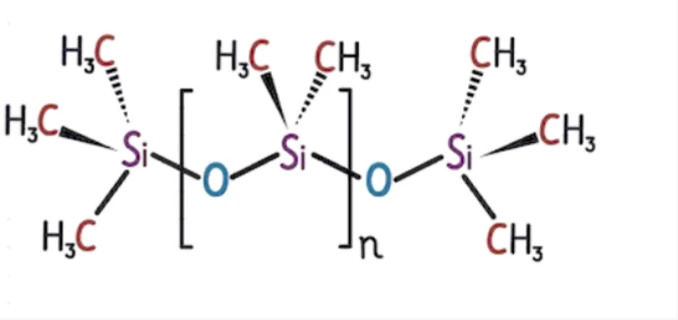
Why is it soft?
Longer bond length and wider bond angle: Si-O bonds are longer than C-C bonds, and the bond angle of Si-O-Si is also larger. The combination of these two things leaves a larger "space for movement" for the chain segment to rotate, making it easier for the chain to bend back and forth - the glass transition temperature (Tg) is therefore very low (PDMS Tg is often around -120 ℃). In a world where room temperature is much higher than Tg, it is naturally a "mollusk".
Side base "lubrication": The most common silicone side base is - CH3. Methyl groups are small in size and have weak interactions with each other. The chains are not very "sticky" with each other, like applying an invisible lubricating oil at the molecular level. Macroscopically, they appear soft and have a gentle rebound.
Low rotational barrier: The rotational resistance around the Si-O bond is small, and the segments are flexible like interconnected joints, which is also the microscopic source of low Tg.
Why is it heat-resistant?
The Si-O bond itself is very capable of breaking: The bond energy of the Si-O bond is significantly higher than that of typical C-C and C-O bonds, requiring higher energy to "break" it, so it is not easily broken at high temperatures.
Inorganic skeleton: The main chain of organic rubber is generally C-C or C-O, which is more susceptible to attack by reactive free radicals under hot oxygen conditions; The Si-O main chain is more stable and undergoes slower thermal oxidative aging.
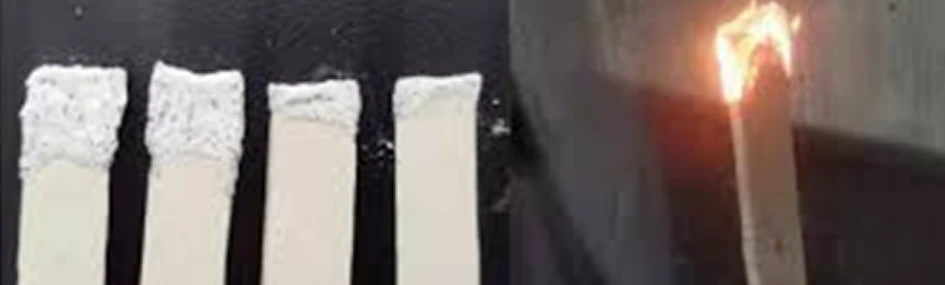
Comes with a protective shell in case of fire: Silicone rubber will generate a dense inorganic ash layer similar to silicon dioxide (SiO ₂) under high temperature/open flame, like quickly covering itself with a heat-resistant shell to block heat and oxygen from continuing to invade, so it is commonly characterized by "self extinguishing" and "non dripping".
Summary in one sentence:
Softness comes from the flexibility of chains and weak intermolecular interactions, while heat resistance comes from strong Si-O bonds and inorganic pyrolysis products. These two things are not contradictory.
